ECO currency: Abidjan welcomes decisive arbitrations
Translated from French (automatic translation) · Read the original article (French)
CEDEAO Finance Ministers are meeting in Abidjan for the 6th meeting of the ECO Task Force. On the menu: the headquarters of the future central bank and the timetable for a gradual launch in 2027.

Is the single West African currency finally reaching a milestone? Since this Friday, November 20, Abidjan has hosted the 6th meeting of the Presidential Task Force on the ECO, which brings together CEDEAO Finance Ministers and central bank governors. Objective: to remove the last institutional blockages to stay on course for a gradual launch from 2027.
A project promised for decades
The idea of a common currency in West Africa is not new. Recalled by Koaci, the road has been long: an ambition displayed in 1983, a monetary cooperation program in 1987, a road map in 2009, a decisive summit in Dakar in 2013, then a new road map adopted in June 2021. The project has been postponed many times.
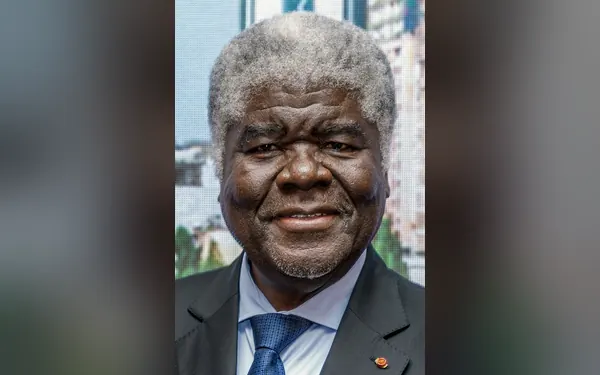
At the opening, the Ivorian Minister of Économie and Finance, Adama Coulibaly, who represented the President of the Republic, insisted on the urgency. According to L'Infodrome, he mentioned an international context marked by the high cost of credit, geopolitical tensions and the persistence of inflation, which makes a common monetary shield more necessary than ever. The President of the CEDEAO Commission, General Birame Diop, for his part insisted on the political will and the reforms to be carried out.
Where will the future central bank be located?
The technical experts, meeting since the beginning of the week, have prepared several sensitive files. The first is diplomatic: determining which country will host the headquarters of the future Central Bank of West Africa, but also that of the community payment and settlement system and the Solidarity and Stabilization Fund.
Second project: the rules of governance, that is to say the distribution of responsibilities and the way of making decisions. We must find an acceptable balance between the countries of the CFA franc zone and the English-speaking economies of the region, starting with Nigeria and Ghana.
A “gradual and inclusive” start
There remains the calendar. Aligning all economies at the same time on convergence criteria, such as controlling budget deficits and inflation, promises to be difficult. The Task Force must therefore validate a “progressive and inclusive” roadmap: the ready countries would lead the way, the others would join the monetary union as their reforms progress.
The recommendations resulting from this meeting will be submitted to the CEDEAO Heads of State. For Abidjan, welcoming these arbitrations is also a signal: Ivory Coast intends to influence the financial architecture of tomorrow.
Sources
- L'Infodrome: Monnaie ECO, the Task Force met in Abidjan to decide on the seat of the future central bank
- Koaci: ECO 2027, member states active in Abidjan
Photo: the Plateau, in Abidjan, seen from the Alassane Ouattara bridge. Edison McCullen, CC BY 4.0 license, via Wikimedia Commons. Cropped image.
Enjoyed this article? Share it and follow Le Média 100filtre on social media.
Spotted an error? Write to the newsroom.